Happy Go Lucky SVG: A Graphic Designer’s Review for T-Shirt Designs
The First Glance: An Instant Mood of Playful Charm
Opening the Happy Go Lucky SVG file, my first impression was one of cheerful, approachable energy. This graphic design asset feels lighthearted and optimistic, built on friendly curves and a sense of casual motion. The style leans towards modern whimsy—it’s not overly childish or ornate, but it possesses a distinct warmth. This immediately suggests a natural fit for projects where personality and positive emotion are key. I pictured a boutique product line, a local café’s summer campaign, or a handmade Etsy shop selling artisanal goods. It’s a visual shortcut to “sunny” and “welcoming.”
Where Happy Go Lucky SVG Shines in Real Client Projects
In practice, I’ve found this creative design asset excels as a central or supporting element for branding that leans into joy. For a recent client project—a small business launching a line of organic tea blends—we needed packaging design and social media graphics that felt natural and uplifting. Happy Go Lucky SVG became the hero graphic on the product labels and a repeated motif on the matching tote bags. Its scalable vector format meant it looked crisp from a tiny sticker to a large poster. For marketing visuals like Instagram posts and Pinterest pins, the transparent PNG files allowed for quick, layered compositions in Canva templates.
Perfect for Expressive Branding and Merchandise
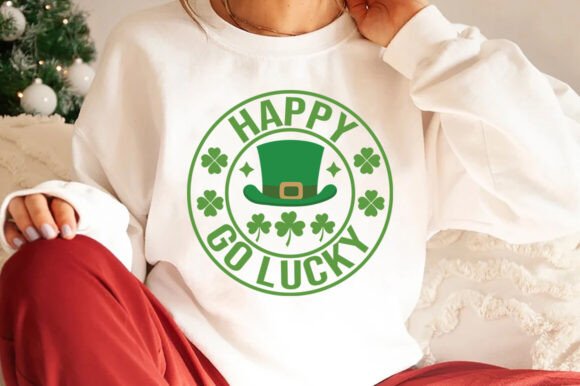
The asset’s inherent charm translates powerfully to merchandise. In t-shirt design, it works wonderfully as a large, central chest graphic or a smaller sleeve accent. For sublimation design on mugs, the detail holds beautifully. I tested it on product mockups for both apparel and printable wall art, and the playful style consistently elevated the item, making it feel like a polished, intentional product rather than generic clipart. It also integrates seamlessly into themed collections; you could easily pair it with complementary script fonts or simpler sans serif fonts to build a full visual identity for a seasonal campaign or local event invitation.
Considerations for Professional Application
As with any display-oriented graphic, thoughtful application is crucial for professional results. The Happy Go Lucky SVG design is rich in character, which means it should be used carefully in contexts demanding ultra-clean visual hierarchy. On crowded layouts with lots of text, or as a tiny logo on a busy website header, its details might become lost or compete for attention. For minimalist branding or very formal corporate materials, its playful nature could feel out of place.
Testing for Versatility and Readability
Before committing to a client’s brand identity, I always run practical tests. First, I preview the asset at both very small and very large sizes to ensure the core shapes remain identifiable. Second, I test it in black and white and on both light and dark backgrounds to confirm contrast and legibility—this is vital for logo design variations and packaging details that might appear on different colored materials. Placing it on realistic mockups, like a t-shirt or a product box, reveals how it interacts with real-world textures and dimensions.
The Impact on Brand Perception and Audience Engagement
Using a cohesive graphic like Happy Go Lucky SVG does more than just decorate; it builds visual trust and emotional appeal. When a small business branding uses a consistent, quality illustration across its website graphics, product labels, and digital ads, it signals professionalism and care. This particular asset, with its happy-go-lucky mood, directly fosters audience engagement by projecting optimism. It can make a blog visual or editorial design feel more inviting, or turn a standard social media graphic into a memorable piece of communication.
A Designer’s Final Checklist Before Commercial Use
When reviewing any digital product for a real client, my final step is a technical and legal review. For the Happy Go Lucky SVG, the provided file formats (EPS, SVG, DXF, PNG) cover most needs: SVG for infinite scalability in Cricut projects or web design, PNG for quick digital use, and EPS for high-end print-ready applications like sign making or detailed card making. I always inspect the SVG or vector paths to ensure they are clean and editable if customization is needed. Crucially, I confirm the commercial license allows use for client work, print-on-demand sales, and other commercial design purposes—this is non-negotiable.
Harmony with Other Design Elements
Lastly, I consider how this illustration interacts with other assets. Compared with a sharp serif font, it creates a lovely contrast of formal and playful. Paired with a clean sans serif, it becomes the expressive focal point. It might overwhelm if used alongside another complex script font, so balance is key. In the end, Happy Go Lucky SVG stands as a versatile, mood-setting graphic design asset. It won’t fit every project, but for those requiring a dose of genuine cheer and handmade business charm, it can be the element that makes a design concept feel complete, polished, and delightfully human.