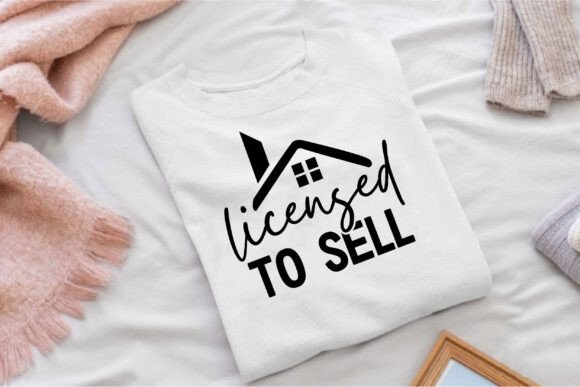
A Real-World Review of the Licensed to Sell Embroidery Design
As a designer who stitches designs for clients and my own shop, I always look at embroidery files with a practical eye. The first question is simple: will this design hold up when it goes from screen to fabric? Today, I’m thinking through the Licensed to Sell design, a file categorized as a graphic for T-Shirt Designs. My goal isn’t just to describe it, but to judge how it would perform in real projects—from a custom sweatshirt for a boutique to a personalized tote bag for a craft fair.
The Immediate Mood and Visual Personality
The title Licensed to Sell immediately sets a tone of authority and professionalism. It’s not a whimsical floral or a playful cartoon. Visually, I expect a design that communicates clarity and confidence. For an embroidery project, this suggests clean lines, bold shapes, and a layout that reads well at a distance. It’s the kind of embroidery design you’d use when the product itself needs to convey trust—think of a maker’s branded apron or a small shop’s merchandise. The theme is inherently commercial, but with a handmade heart. It feels like it belongs on items that represent a business or a serious craft.
A Natural Fit for Specific Projects
Let’s picture a real scenario. I’m preparing a batch of embroidered tote bags for my Etsy shop, aiming for a product that looks both professional and artisan-made. The Licensed to Sell design comes to mind as a potential logo or statement piece on the bag. Its graphic nature likely means it’s built with solid areas of fill stitch, which would provide good coverage on a textured fabric like canvas. Similarly, for a client who runs a handmade children’s clothing line, this design might be perfect as a small, crisp emblem on a baby sweatshirt or blanket, subtly branding the item as a quality, licensed to sell product without being overwhelming. It naturally fits custom apparel, caps, aprons, and even embroidered patches meant for resale.
Performance on Fabric: Where It Will Shine and Where to Be Careful
In real-life embroidery, the success of a design hinges on its execution. For a graphic like this, I’d consider stitch density carefully. High density can make a design stiff on stretchy fabrics like t-shirts, so I’d likely choose a stable fabric like a cotton sweatshirt or a denim cap for the best result. The design’s clarity is paramount—small lettering or intricate details within the graphic could become fuzzy if not stitched with precision. This is where testing on scrap fabric first is non-negotiable.
I’d test it on both light and dark backgrounds to check thread color contrast. On a dark fabric, you might need a bright, bold thread color to make the statement pop. On a light fabric, a classic black or navy could look sharp and professional. Using proper stabilizer is key, especially if the final product is a tea towel or pillow cover that will undergo frequent washing. The design’s integrity needs to last.
Challenging Contexts for This Design
Some applications require extra thought. If the design has very tiny lettering, stitching it on a curved surface like a cap might be tricky—the small hoop area and the curve could distort the text. Similarly, very textured fabrics like a thick blanket might swallow finer details. For layered garments or items with thin fabric, the stitch density could cause puckering if not managed correctly. The advice here is universal: know your substrate. A design like Licensed to Sell wants a clean, stable canvas to look its best.
The Impact on Product Value and Customer Perception
When you stitch this onto a finished product, its impact goes beyond decoration. On a handmade product, it can elevate the perceived value. It signals that the item isn’t just a hobby project, but something created with intent for sale—this builds customer trust. For a personalized gift, like an embroidered pillow for a new entrepreneur, it adds a layer of meaningful encouragement. It enhances brand consistency for a small business using it across their merchandise, from tote bags to kitchen towels.
From a commercial angle, it directly addresses the maker’s right to sell, which can be a powerful part of the product’s story in an Etsy listing or at a craft fair. The visual appeal needs to be crisp and clean to support that message—a poorly stitched, blurry version would undermine the professionalism it’s meant to convey.
Practical Notes for the Working Designer
Before loading this digital embroidery file, my checklist is straightforward. First, I need to confirm the specifics of the download. The product description mentions a single zip file, but as a professional, I must verify the actual embroidery file formats and their compatibility with my machine. I also need to confirm licensing explicitly—the description says it can be used for many purposes, but I must ensure it clearly covers selling the finished product or using it in my commercial embroidery projects. Never assume.
Then, the hands-on prep: I’ll run a test on a scrap of the final project fabric. I’ll review stitch density by looking at the stitched sample’s flexibility. I’ll inspect small details to see if they remain clear. I’ll even create a printable mockup or a simple black-and-white stitched version to see how it reads without color. These steps separate a successful embroidery project from a disappointing one.
The Final Verdict for Makers and Entrepreneurs
The Licensed to Sell design, from a practical designer’s viewpoint, is a tool with a specific purpose. It’s not a generic decoration. Its value lies in its thematic strength and its potential to enhance the commercial narrative of a handmade product. It belongs on items where that message is relevant: boutique branding, small shop products, gifts for business-minded friends, or even as a design asset in your own craft business portfolio.
Its success depends entirely on your skill in execution—choosing the right fabric, thread, stabilizer, and hoop size to let its graphic nature shine. For apparel decorators and creative entrepreneurs, it’s a design that, when stitched well, can add a layer of legitimacy and polished professionalism to your work. Approach it not as just another graphic, but as a statement piece that requires careful setup. That’s how you turn a digital file into a truly valuable embroidered reality.